Free Delivery  ·  COD Available  ·  15-Day Returns
Pricio
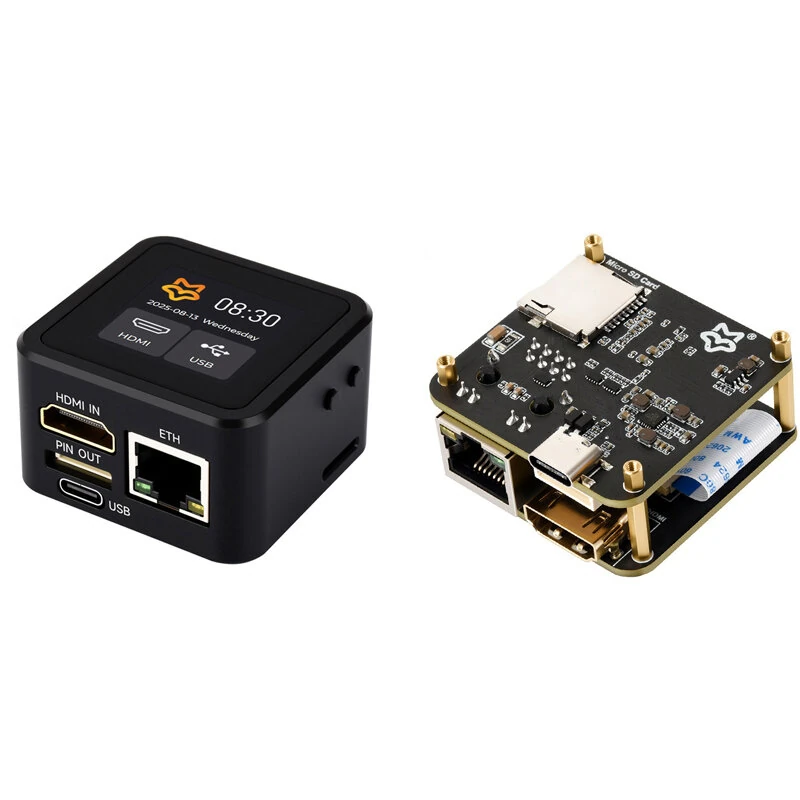
LuckFox Pico RV1103 Linux Micro Development Board, Integrates ARM Cortex-A7/RISC-V MCU/NPU/ISP Processors — image 1
Hover to zoom

1 / 7 · Click to enlarge

Luckfox

LuckFox Pico RV1103 Linux Micro Development Board, Integrates ARM Cortex-A7/RISC-V MCU/NPU/ISP Processors

26+ bought in past month
AI Summary
RISC-V Core Development Boards for everyday users

The LuckFox Pico RV1103 Linux Micro Development Board, Integrates ARM Cortex-A7/RISC-V MCU/NPU/ISP Processors by Luckfox is a mid-range risc-v core development boards designed for everyday users. It features Item Type: Development Board and Processor: Cortex A7@1.2GHz + RISC-V.

₹2,161
Free Shipping💵 COD Available

Available Offers

Free Delivery on this order. No minimum order value.

15-Day Easy Returns — hassle-free return & full refund.

Secure Payment — 100% safe checkout with UPI, Cards & Net Banking.

Total: ₹2,161
Buying tip: A well-rounded choice at a fair price. Recommended for most buyers.
Estimated delivery: 16 Aug30 Aug
Free Shipping
Pan India delivery
15-Day Returns
Hassle-free policy
Secure Payment
Razorpay protected
Quality Assured
Vetted products only

Available Offers

💳

5% Cashback

Pay with UPI & get 5% cashback (up to ₹50) via Razorpay

🏦

No-Cost EMI

Available on select bank cards at checkout. 0% interest for 3 months.

📦

Free Shipping

Free delivery on all orders. No minimum order value.

💵

Cash on Delivery

COD available on orders up to ₹5,000 across India.

Quick Specs

Item Type: Development Board
Processor: Cortex A7@1.2GHz + RISC-V
Memory Capacity: 64MB DDR2
USB: USB 2.0 Host/Device
Camera Details: MIPI CSI 2-lane
GPIO: 24 × GPIO pins

Ideal For

Everyday convenience
Share:
SKU: robu-1738067Category: RISC-V Core Development Boards

About This Product

The LuckFox Pico RV1103 Linux Micro Development Board, Integrates ARM Cortex-A7/RISC-V MCU/NPU/ISP Processors by Luckfox is a mid-range risc-v core development boards designed for everyday users. It delivers reliable performance at an accessible price.

Key Specifications

  • Item Type: Development Board
  • Processor: Cortex A7@1.2GHz + RISC-V — smooth, lag-free performance
  • Memory Capacity: 64MB DDR2 — effortless multitasking
  • USB: USB 2.0 Host/Device
  • Camera Details: MIPI CSI 2-lane — captures sharp, detailed images
  • GPIO: 24 × GPIO pins
  • Ethernet: 10/100M Ethernet controller and embedded PHY
  • Shipping Weight: 0.005 kg

Why Buy from Pricio?

Pricio sources this product directly, cutting out multiple middlemen. Every order includes free shipping, a 15-day return policy, and secure payment via Razorpay.

The LuckFox Pico RV1103 is a compact Linux micro development board featuring a powerful combination of processors, including ARM Cortex-A7, RISC-V MCU, NPU (Neural Processing Unit), and ISP (Image Signal Processor). This versatile board offers a wide range of capabilities, making it suitable for various applications. Its integration of advanced processors enables efficient computation, machine learning, and image processing, making it an excellent choice for diverse development projects.

Useful Link:

https://wiki.luckfox.com/Luckfox-Pico/Luckfox-Pico-quick-start/

Features:

  1. Compact Linux dev board.
  2. ARM Cortex-A7 & RISC-V MCU.
  3. NPU for AI tasks.
  4. ISP for image processing.
  5. Versatile for various applications.

Package Includes:

1 x LuckFox Pico RV1103 Linux Micro Development Board, Integrates ARM Cortex-A7/RISC-V MCU/NPU/ISP Processors

Setup Guide

1
Identify the pins
Locate VCC (power), GND (ground), and data pins (SDA/SCL for I2C, MOSI/MISO for SPI, or TX/RX for UART). Refer to the pinout diagram on the product page.
2
Wire to your microcontroller
Connect VCC to 3.3V or 5V (check the module spec), GND to GND, and data pins to the appropriate GPIO pins on your Arduino or Raspberry Pi.
3
Install libraries
In Arduino IDE, go to Sketch → Include Library → Manage Libraries and search for the sensor library. Install the recommended version.
4
Upload example sketch
Open File → Examples → [library name] → Basic Example. Upload to your board and open Serial Monitor to view output.
5
Calibrate if needed
Some sensors (temperature, humidity, distance) may need a short warm-up period or calibration. Run the calibration sketch if provided.